


Why Pet Dental Cleanings Use Anesthesia (and Why Anesthesia-Free Isn’t the Same)
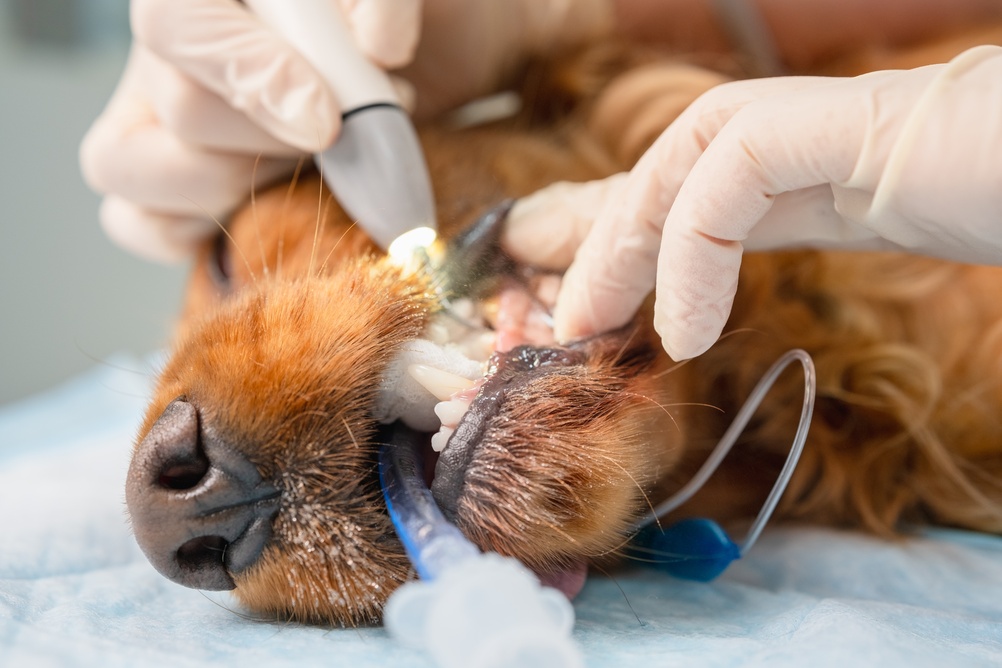
Anesthesia-free dental cleanings sound convenient. You want tartar gone without putting your dog or cat under. The problem is that a real veterinary dental cleaning is a medical procedure, not a cosmetic scrape of what you can see. Anesthesia-free is not the same as a dental under anesthesia, and the difference is what is happening under the gumline.
What a Veterinary Dental Cleaning Actually Includes
A professional dental at True Animal Vet is done under general anesthesia with monitoring. We probe below the gumline, scale tartar off the crown and under the gum, polish the teeth, and take dental x-rays. If a tooth is already dead or abscessed, we can extract it while your pet is asleep and comfortable. That is the work that treats periodontal disease, not just the brown film you notice on the outside of the teeth.
Periodontal disease is graded, and a full exam under anesthesia is how we actually see what is going on below the gumline. Much of the disease sits where you cannot see it at home, and where an awake pet will not let us look for long.
We offer dentals at both hospitals, The Woodlands and Grand Oaks. Home care still matters. Brushing and dental chews help slow plaque, but they are not a substitute for professional cleaning when there is tartar under the gumline or loose teeth. If the mouth already smells, bleeds, or has teeth that wiggle, your pet needs a real dental exam, not a surface polish.
Why We Use Anesthesia
Scaling, probing, and dental x-rays require a still patient and a protected airway. Sharp instruments and ultrasonic scalers do not belong in the mouth of a pet who is wiggling, biting, or terrified. General anesthesia lets us place a tube in the airway, keep oxygen flowing, give pain control, and place an IV catheter so we can support blood pressure and give medications if needed.
You cannot take diagnostic dental x-rays on a moving dog. You cannot clean pockets under the gum safely if the pet can jerk. You cannot extract a painful tooth humanely without anesthesia and pain control. That is why we use general anesthesia for dentals. The mouth is a surgical field once you go below the gumline. If a tooth needs to come out, your pet should be asleep, monitored, and given pain medication, not held down.
What anesthesia-free cleanings can and cannot do
An anesthesia-free dental cleaning typically only scrapes tartar you can see on the crown while the pet is restrained. It does not treat periodontal disease under the gum. It does not allow dental x-rays. It can be painful or stressful. The teeth can look cleaner while disease continues under the gum, where abscesses and bone loss actually live. We do not offer anesthesia-free dental. If we recommend a dental, we mean a medical cleaning under anesthesia, with probing, scaling, polishing, and x-rays as indicated.
If another business has already done an anesthesia-free scrape, tell us. We still need to look under the gum and often still need dental x-rays. A recent cosmetic cleaning does not mean the mouth is healthy. It only means the visible tartar was chipped off while your pet was awake.
How We Keep Anesthesia as Safe as We Can
Anesthesia risk is real. We do not claim it is risk-free. We also do not want fear of anesthesia to keep a painful mouth untreated. We manage risk with a pre-op exam and bloodwork, a protocol tailored to your pet, and monitoring during the procedure. Age, kidney values, heart murmurs, and other findings change how we anesthetize. That is the point of the workup.
Most pets who need a dental are better served by a planned procedure than by waiting until they stop eating. Infection in the mouth hurts and can cost teeth that might have been saved if we had seen the x-rays sooner. If we are concerned about anesthesia in a particular pet, we will say so and talk through options. We will not skip the medical parts of a dental just to avoid anesthesia.
After the procedure, we go over what we found and how to care for the mouth at home. Brushing and chews can help maintain the work. They still do not replace the next professional cleaning when tartar and pockets return. If you are unsure whether your dog or cat needs a dental, start with an exam. We can look in the mouth and recommend whether a full cleaning under anesthesia is the next step.
How to reach us
If you want a real look at your pet's teeth, schedule a dental exam at True Animal Vet. We offer dentals at both hospitals. We will look in the mouth and talk with you about whether a cleaning under anesthesia is needed.
The Woodlands: 4524 Research Forest Dr, The Woodlands, TX 77381. Call (281) 867-5968.
Grand Oaks: 4970 Riley Fuzzel Rd, Spring, TX 77386. Call (281) 869-3010.
You can also text (281) 916-3282. Hours are Monday through Friday 7:30am to 9pm, Saturday 8am to 12pm. Sunday we are closed. We are not 24/7. If your pet has a swollen face, cannot eat, or is in obvious mouth pain after hours, go to the nearest emergency hospital, then call us when we reopen.


Contact Information
Clinic Hours
| Monday | 7:30am - 9:00pm |
| Tuesday | 7:30am - 9:00pm |
| Wednesday | 7:30am - 9:00pm |
| Thursday | 7:30am - 9:00pm |
| Friday | 7:30am - 9:00pm |
| Saturday | 8:00am - 12:00pm |
| Sunday | Closed |
© 2026 True Animal Vet | All Rights Reserved | Privacy Policy | Sitemap
Powered by: 